A Stoneworld Group Company
A garden rill is a formal water channel that can bring light, reflection and movement into an outdoor space. Rills have been used in garden design for centuries and can feature either still or flowing water. To build a garden rill, you’ll need to choose a suitable location, plan the channel’s dimensions, create a stable base and finish the edges with natural stone. In this guide, Stoneworld explains how to build a garden rill, which materials to use and how to incorporate one into your garden design.
A garden rill can be incorporated into gardens of different sizes and styles. It works particularly well where the water can be viewed and appreciated, whether as a focal point, alongside planting or connecting different areas of the garden. Rills can be positioned away from the house or close to a building. Where a rill sits alongside a property, care must be taken to protect the damp-proof course from water ingress. If the water is intended to flow towards a pond or another water feature, a suitable gradient must be incorporated during construction.
Building a garden rill requires careful planning to create a level, well-defined water channel with the correct gradient where flowing water is required.
Step 1 – Plan the dimensions
As a general guide, a garden rill should be approximately 30–60cm wide and 24–45cm deep. Its length will depend on the available garden space and overall design.
Step 2 – Excavate the channel
Dig the channel to the required dimensions, incorporating a gentle gradient if the water needs to flow towards a pond or another water feature.
Step 3 – Prepare the base and lining
Concrete provides a suitable base for a garden rill. The channel can then be lined with a butyl pond liner to contain the water.
Step 4 – Install natural stone edging
Choose edging stones that complement the surrounding garden design. Both edges must remain level along the length of the rill to achieve its characteristic formal appearance.
Step 5 – Check the gradient and alignment
Where flowing water is required, check the gradient along the entire channel to ensure a steady flow.
Because accurate levels and alignment are essential, Stoneworld recommends employing an experienced landscape specialist to construct the rill.
Natural stone is a popular choice for garden rills because it can complement both contemporary and traditional garden designs. Stoneworld supplies natural stone coping stones that can be used to create the defined edges associated with garden rills. The choice of stone should complement the surrounding paving, planting and landscaping features.
Decorative slate, paddle stones and stepping stones can also be incorporated into the design, depending on the appearance you want to achieve. Stoneworld offers a range of landscaping stones and can manufacture bespoke stone elements through its on-site masonry workshop.

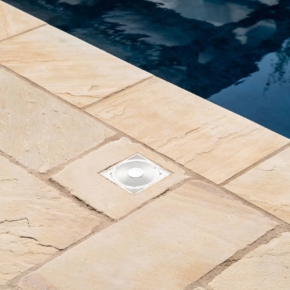


Garden rills can be designed to complement both contemporary and traditional outdoor spaces.
Stoneworld can also manufacture bespoke stone elements for garden rills through its on-site masonry workshop.
If you have any questions, please call us on 01844 279274 or email us at sales@stoneworld.co.uk and one of our team will be happy to help. Alternatively you can fill out our enquiry form below or follow this link.



 sales@stoneworld.co.uk
 01844 279274