 sales@stoneworld.co.uk
 01844 279274






The session was delivered by Ellie, our Sales Director at Stoneworld. Ellie guided attendees through the material knowledge, technical considerations and practical project examples that support better stone specification.
Our aim was to help design professionals make more informed decisions when selecting stone, while avoiding common specification issues that can affect performance, appearance and long-term maintenance.

Looking Beyond the Stone Type
One of the key messages Ellie shared during the CPD was that stone should not be selected by name or appearance alone.
Natural stone includes many different limestones, sandstones, granites, basalts and quartzites. However, materials within the same broad stone family can have very different properties.
Before deciding on a stone type, we encourage specifiers to first establish the demands of the project. This includes considering where the stone will be installed, how it will be used, the expected level of traffic, exposure to water and weather, and the required surface finish.
The correct stone is the one that meets both the practical and aesthetic requirements of the application.
The Key Considerations When Specifying Stone
During the CPD, Ellie explored several important factors that should be assessed as part of the specification process.
Stone thickness must be appropriate for the intended use, substrate and expected loading. Standard paving may be suitable at approximately 30mm thick in many residential settings, while heavier traffic and commercial applications may require a more substantial specification.
Porosity is another major consideration. It can influence how a stone performs outdoors, its susceptibility to staining and its long-term resistance to weathering. Some stones may benefit from sealing or other surface treatments, but these should always be selected according to the individual material and application.
Colour also requires careful consideration. Natural stone changes as it weathers and ages. Rain, sunlight, vegetation, pollution and regular use can all affect its appearance. These changes are part of the character of a natural material, but they should be understood and communicated from the outset.
Surface texture is particularly important in wet areas and locations with frequent pedestrian traffic. A finish that looks attractive in a sample may not necessarily provide the required level of slip resistance around a swimming pool, on external steps or within a public space.
Matching the Finish to the Material
Different stones respond differently to surface treatments.
During the session, Ellie explained why a finish should be selected according to the physical properties of the stone, rather than applying the same process to every material.
For example, a more porous sandstone may be gently honed while retaining useful slip resistance through the structure of the stone. A denser sandstone may become dangerously slippery if polished and could instead require a sandblasted finish.
For certain limestones, acid etching can create a refined texture with strong slip-resistant qualities. This can provide an effective balance between safety, appearance and the character of the material.
Ellie also highlighted that technical data sheets and relevant slip-test results should form an important part of the decision-making process.
Learning from Completed Projects
Ellie used completed projects to show how the principles of stone specification work in practice.
At Bicester Village, the selected paving needed to be hardwearing, suitable for British weather, safe underfoot and consistent in colour and quality. Replacement availability was also important for the long-term management of the site.


Our pool projects demonstrated the importance of selecting suitable textures and bespoke details, including copings, step treads, precision cuts and drainage features.

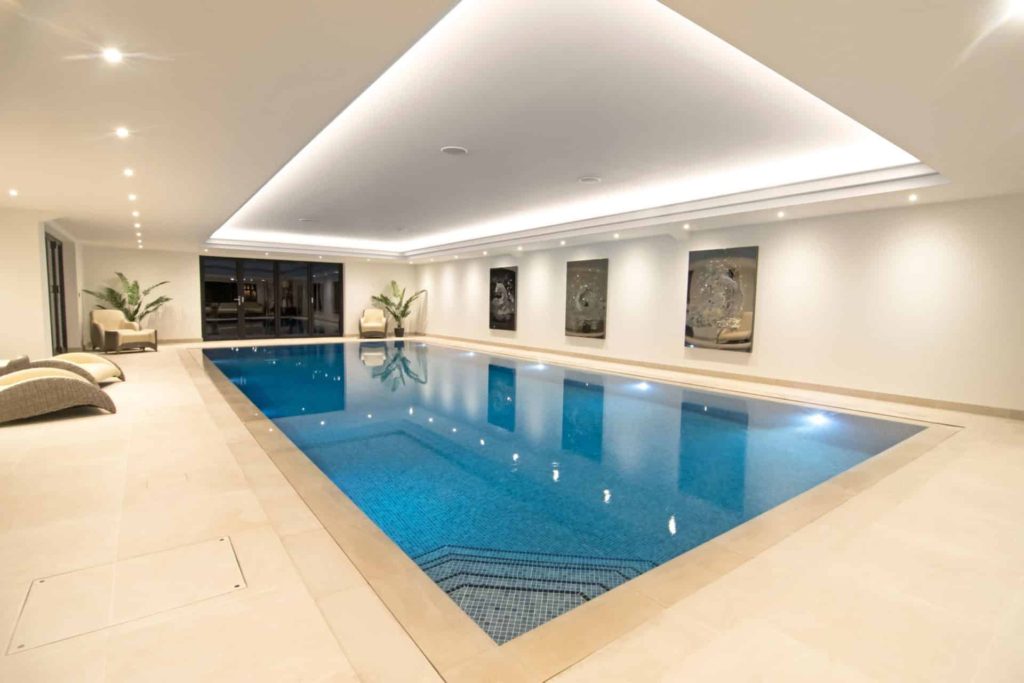
These examples showed that successful specification is not simply about choosing a product. It requires coordination between design intent, technical performance, fabrication, installation and future maintenance.
British Stone, Global Sourcing and Sustainability
Ellie also discussed the source of natural stone and the factors that should be considered when selecting materials.
British stone can provide a strong connection to local architecture and may help reduce transport-related emissions. At the same time, high-quality materials are available from established quarries around the world.
We believe responsible specification means working with trusted suppliers, reviewing technical information and confirming that appropriate ethical sourcing standards are followed.
Natural stone also offers an important sustainability advantage. It is a durable material that can provide a long service life, be reused and, when correctly specified, require relatively limited processing compared with many manufactured alternatives.
Combining Technology with Traditional Craftsmanship
Ellie also introduced attendees to our masonry capabilities at Stoneworld.


Our modern CNC cutting, waterjet technology, digital scanning and CNC carving allow stone to be manufactured with a high level of accuracy and repeatability. These technologies sit alongside traditional masonry skills, enabling us to produce bespoke copings, steps, curved pieces, architectural details, water features and sculptural elements.
This combination gives designers greater freedom while maintaining the natural integrity of the material.
Continuing to Share Stone Knowledge

At Stoneworld, we have worked with natural stone for 25 years, supplying and fabricating materials for landscape designers, architects, contractors, developers and homeowners.
Hosting CPD sessions is an important part of how we share that experience with the wider industry.
Thank you to everyone who attended our first session of the year and contributed to the discussion. We look forward to hosting further CPDs and helping more professionals specify stone with confidence.
Book a Natural Stone CPD
Looking to build your knowledge of natural stone specification?
Stoneworld offers CPD sessions for architects, garden designers and other industry professionals, covering stone selection, finishes, technical performance and practical specification.
Book a CPD session with Stoneworld or contact our team to discuss your requirements.


