 sales@stoneworld.co.uk
 01844 279274





Circles
Stoneworld supplies stone circles in natural stone for residential, commercial and landscape applications across the UK. The range includes standard segmental circle systems in several stone types, with bespoke cut circles also available for projects where standard formats do not suit the required diameter, material or perimeter resolution.
Featured Products
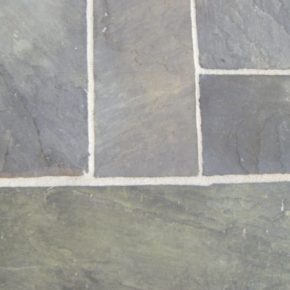


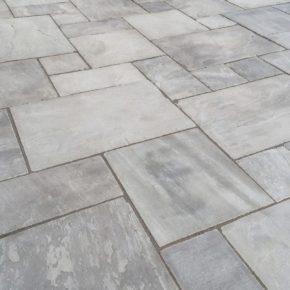


Stone paving circles are used as focal features within larger hard landscaping schemes, at path junctions, as centrepieces on terraces or courtyards, as formal devices within structured garden layouts, and as visual anchors around water features, specimen planting or entrance areas. Their function is primarily compositional. A well-placed, well-resolved stone circle creates a sense of order within the surrounding paving and draws the layout together in a way that a simple rectangular grid cannot.
Stoneworld supplies stone circles in natural stone for residential, commercial and landscape applications across the UK. The range includes standard segmental circle systems in several stone types, with bespoke cut circles also available for projects where standard formats do not suit the required diameter, material or perimeter resolution. As with all exterior stone, the visual result depends on the quality of the material, the precision of the geometry and the care taken to coordinate the circle with the surrounding paving from the outset.
Segmental stone circles
Standard segmental circle systems are produced from pre-cut natural stone units arranged in concentric rings to form a complete circular feature. Each ring is typically made up of a set number of fan-shaped or sector-cut pieces, with a central keystone or circular centrepiece completing the feature. Segmental systems are well suited to projects where the required diameter aligns with the available standard formats, and where the paving surrounding the circle can be laid out to meet the circle’s perimeter without forcing awkward cuts.
York stone, limestone and sandstone are all commonly used for segmental circles. The stone type should coordinate with the surrounding paving material, using the same stone family for both the circle and the field paving creates a coherent finish, while contrast in finish or colour between the circle rings and the field can create a more deliberate design emphasis without introducing a material mismatch.
Learn more about laying patterns


Set-out and Perimeter Resolution
The success of any stone circle in a paved area depends as much on what surrounds it as on the circle itself. The field paving needs to be set out so that units meet the circle perimeter with sensible joint lines and without a band of small or awkward cuts at the transition. This means the paving grid and the circle diameter need to be planned in relation to each other at design stage, not resolved independently and joined on site.
Where the surrounding paving is laid in a regular bond pattern, the most common approach is to allow the perimeter of the circle to interrupt the bond, with the cuts at the perimeter being made cleanly and consistently around the full circumference. Where the surrounding paving is set out radially from the circle, the joint lines can continue outward from the circle’s ring structure, which can create a stronger visual relationship between the feature and the wider paved area.
Contact Our Team to Get Started
Bespoke cut stone circles
For projects where standard segmental systems do not achieve the required result, because the diameter is non-standard, the material is specific to the project, the joint width needs to match an adjacent module, or the perimeter detail requires a custom resolution, bespoke cut circles can be produced from solid natural stone. Stoneworld fabricates bespoke circles using CNC and workshop machinery, cutting individual rings and a central feature piece to the required geometry and finish.
Bespoke circles give the project team full control over diameter, stone type, ring width, joint profile, finish and how the outer ring meets the field paving. This level of control is particularly valuable on higher-specification residential and commercial projects where the circle is a deliberate architectural detail rather than a standard off-the-shelf product.

Circles can be produced in York stone, Bath limestone, sandstone, granite and other natural stone types. The choice depends on the visual character of the wider scheme, the performance requirements of the setting, and whether the circle needs to match or contrast with the surrounding paving material.
Granite is the most durable option and suits settings where the circle will receive high foot traffic, vehicle loading, or where a long maintenance cycle is needed. Limestone and sandstone offer warmer tonal character and work well in residential and garden settings. York stone’s natural surface variation and its long association with British garden design make it a popular choice for circles used within traditional or naturalistic planting schemes.
When specifying a stone circle, the starting point should be the required diameter and how the circle sits within the overall paving layout. The diameter should be confirmed before the field paving is set out, so the surrounding modules can be planned in relation to the circle perimeter rather than the other way around. Material type, ring width, joint size, surface finish and centrepiece detail should all be agreed before production begins on bespoke work.
For circles set into existing paving, for example as a replacement feature or reinstatement, the existing joint and module pattern needs to be surveyed accurately so the new circle can be produced to integrate without visible discontinuity in the surrounding field.


