 sales@stoneworld.co.uk
 01844 279274






Choosing the right pool coping is an important part of creating a safe, practical and well-finished swimming pool area. The material, surface finish, thickness and edge profile all influence how the pool looks, feels and performs over time.
Stoneworld supplies natural stone and porcelain pool copings in a wide range of standard and bespoke options. This guide explains what pool copings are, how to choose the right material and what to consider when planning installation and maintenance.
What are Pool Copings?
Pool copings are the material installed around the upper edge of a swimming pool. They create a transition between the pool structure and the surrounding paving, terrace or landscaping.
As well as completing the appearance of the pool, copings serve several practical purposes. It protects the top of the pool structure, helps direct water away from the pool surround and provides a comfortable edge for swimmers to hold or sit on.
The correct finish can also improve grip around wet areas. This makes material selection particularly important when designing pools, spas and other outdoor areas exposed to water.
Why are Pool Copings important?
Without suitable copings, the edge of a swimming pool can look incomplete and may be more vulnerable to water ingress, staining and general wear.


Well-specified coping can:
- Protect the upper edge of the pool structure
- Create a smooth and comfortable pool edge
- Improve grip around wet areas
- Help manage surface water
- Provide a coordinated transition into the surrounding paving
- Enhance the overall appearance of the pool
Pool copings should be considered at an early stage of the project so that the dimensions, joints, edge details and surrounding paving can be planned correctly.
Pool Coping Materials Available from Stoneworld
Stoneworld supplies pool coping in both natural stone and porcelain. Each material offers different visual and practical benefits.
Natural Stone Pool Copings
Natural stone is a popular choice for swimming pools because every piece has its own variation in tone, texture and character. It works particularly well in gardens where the pool needs to sit naturally within the wider landscape.
Depending on the stone and finish selected, natural stone can suit traditional properties, contemporary gardens, country homes and Mediterranean-inspired pool areas.
White Mint Sawn & Sandblasted Pool Copings
White Mint sandstone features soft, warm tones that work well with planting, rendered walls and traditional garden schemes.
The sawn and sandblasted finish creates a clean appearance while providing additional surface texture for use around wet areas. It is a practical option for customers looking for a light natural stone with subtle variation.


Fossil Mint Hand-Cut Pool Copings
Fossil Mint sandstone has warm yellow and cream tones, often with natural fossil markings and variation across the surface.
Its hand-cut edges and riven texture give it a traditional appearance. This makes it particularly suitable for country gardens, period properties and pools surrounded by natural stone paving.
La Roche Acid Etched Pool Copings
La Roche limestone has an elegant and understated appearance that complements both modern and traditional pool designs.
The acid-etched surface adds texture to the stone and helps improve grip in wet conditions. Its consistent colouring and refined finish make it a strong choice for pools, spas and high-quality outdoor living spaces.

Porcelain Pool Copings
Porcelain offers a consistent colour and finish, making it particularly suitable for contemporary pool designs.


It is resistant to staining, frost, chlorine and ultraviolet exposure, while requiring relatively little maintenance. Porcelain copings can also be coordinated with matching porcelain paving to create a consistent finish across the whole pool surround.
Natural Stone or Porcelain: Which is best?
The best choice will depend on the style of the project, the required level of maintenance and surrounding materials.
| Choose Natural Stone If You Want: | Choose Porcelain If You Want: |
|---|---|
| Natural colour variation and character | Consistent colour and sizing |
| A traditional or high-end appearance | A clean, contemporary finish |
| A material that works naturally with garden planting | Low maintenance requirements |
| Bespoke edge profiles and custom fabrication | Resistance to staining and fading |
| Coping that can be coordinated with natural stone paving | Coordinated indoor and outdoor surfaces |
Neither material is automatically better than the other. The correct choice depends on the design, expected use and required finish.
Choosing the Right Thickness
Pool coping thickness can affect both the appearance and performance of the finished edge.
Natural stone copings are commonly supplied in thicknesses between approximately 30mm and 50mm, although bespoke sizes may be available depending on the material.
Thicker copings can create a more substantial appearance, particularly when used with a drop edge or exposed pool wall. Thinner options may suit modern schemes where a lighter and more minimal finish is required.
The specification should also take account of the supporting structure, bedding method, piece size and anticipated use. A suitable installer or project professional should confirm the final build-up before the material is ordered.
Choosing the Right Surface Finish
The finish changes the appearance, texture and grip of the coping.

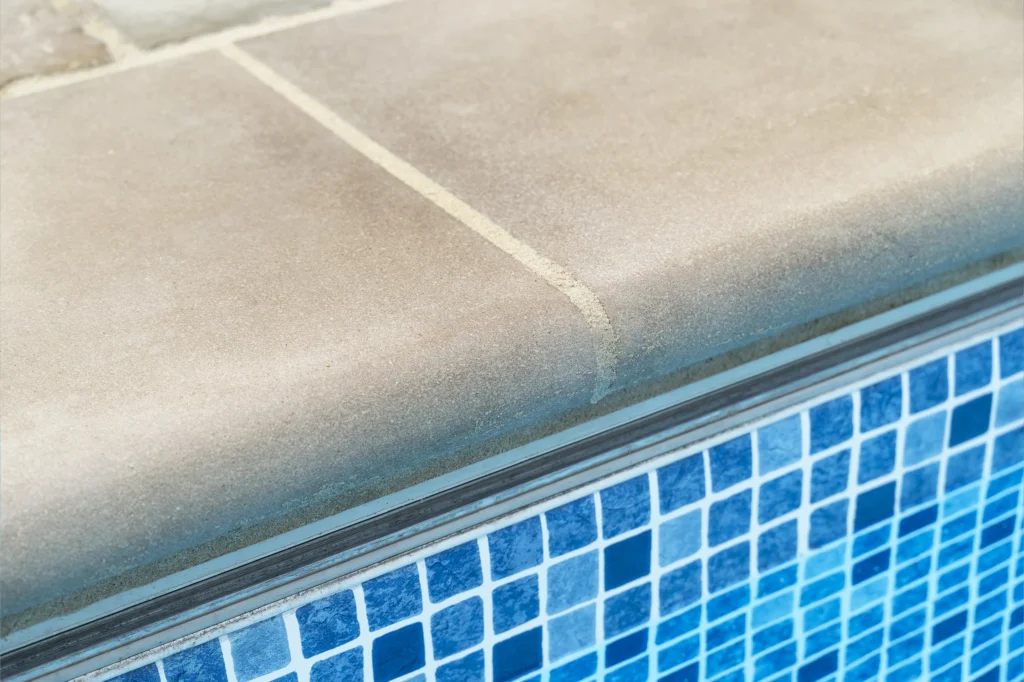

Sawn and Sandblasted
A sawn and sandblasted finish creates a clean, even surface with added texture. It is widely used around pools because it provides a refined appearance without being overly smooth.
Honed
Honed stone has a smooth and refined surface. It can create an elegant finish but must be assessed carefully for use in wet areas, as grip levels vary between stone types and finishes.
Tumbled
Tumbled coping has softened edges and a gently aged appearance. It is well suited to traditional gardens and informal pool designs.
Riven or Hand-Cut
Riven stone retains more of its natural surface texture. Hand-Cut edges create a traditional appearance with greater variation between pieces.
Acid-Etched
Acid etching creates a lightly textured finish on suitable limestone. This can improve grip while retaining a clean and refined appearance.
Choosing the Right Surface Finish
The edge profile is the finished detail visible at the inside of the pool.


Bullnose Edge
A bullnose has a rounded front edge that provides a comfortable surface for swimmers to hold or sit against. It is a traditional and practical choice for many pool designs.
Pencil Edge
A pencil edge has small, neat radius rather than a fully rounded profile. It provides a clean and understated finish.
Overlip Edge
A square edge creates a sharp and contemporary appearance. The exposed corners should still be lightly eased to remove sharpness and reduce the risk of damage.
Drop Edge
A drop edge extends vertically down the face of the pool wall. It creates the appearance of a much thicker piece of stone or porcelain and is commonly used contemporary pools
Stoneworld can fabricate bespoke coping profiles to suit specific pool dimensions and design requirements.
Slip Resistance and Poolside Safety
Safety should be considered alongside appearance when selecting coping and paving for a pool area.
Wet surfaces can become slippery, particularly when unsuitable materials or overly smooth finishes are used. Surface texture, drainage, maintenance and installation quality all contribute to finished performance.
Natural stone finishes such as sandblasted, acid-etched, brushed and tumbled surfaces can provide additional texture. Porcelain products intended for outdoor and poolside use are also available with textured surfaces designed for wet environments.
Before ordering, customers should consider:
- The declared slip resistance of the product
- Whether the test relates to wet or dry conditions
- The proposed installation angle
- Drainage around the pool
- Cleaning and maintenance requirements
- The use of sealers or treatments that could affect grip
Samples and technical information should be reviewed where slip resistance is a key project requirement.
Standard and Bespoke Pool Coping
Standard coping sizes may be suitable for rectangular pools with straightforward dimensions. However, many projects require bespoke fabrication.
Stoneworld can produce made-to-measure coping for:
- Curved and circular pools
- Roman ends
- Internal and external corners
- Steps and submerged ledges
- Spas and hot tubs
- Infinity pool edges
- Raised pools
- Water features
- Unusual angles and junctions
Accurate drawings, templates or digital files may be required for more complex shapes. Planning these details before production helps achieve consistent joints and a professional finish during installation.


Benefits of Choosing Stoneworld Pool Coping
Stoneworld combines stone supply with in-house masonry and fabrication capabilities. This allows us to support projects that require more than standard off-the-shelf coping.
Our pool coping service includes:
- Natural stone and porcelain options
- Standard and bespoke sizes
- Custom edge profiles
- Precision cutting and fabrication
- Coping for straight, curved and irregular pools
- Coordinated paving options
- Technical guidance and product samples
- Nationwide delivery
With 25 years of experience working with stone, our team can help customers, designers and contractors select a suitable material and develop the correct coping details for the project.


Pool Coping Costs
The cost of pool coping varies according to the material, thickness, dimensions, finish and amount of fabrication required.
Standard straight coping will generally cost less than bespoke pieces with curved cuts, corner details or specialist edge profiles. Natural stone pricing also varies according to the type and availability of the stone.
Other costs to consider include:
- Delivery
- Adhesive and bedding materials
- Jointing products
- Sealing products
- Installation labour
- Templates or site measurements
- Bespoke fabrication
- Additional pieces for cuts and wastage
For an accurate quotation, provide the pool dimensions, coping width, preferred thickness, edge profile, quantities and delivery postcode.
Pool Coping Installation Guide
Pool coping should be installed by an experienced professional using products and methods suitable for swimming pool environments.
Tools and Materials Typically Required
- Rubber mallet
- Spirit level
- Measuring equipment
- Tile or stone spacers
- Suitable external-grade adhesive or bedding mortar
- Flexible jointing material
- Appropriate cutting equipment
- Personal protective equipment
The exact materials and installation method will depend on the coping type, pool construction and substrate.
Dry Lay the Coping
Lay out the coping before fixing it permanently. This allows the installer to check colour variation, joint positions, corner details and the placement of cut pieces.
Natural stone should be mixed from different crates or pallets to create a balanced blend of colour and texture.
Check Falls and Levels
The coping must be installed to the correct level and fall. Water should generally be directed away from the pool unless the pool design specifies another drainage arrangement.
Pool falls can cause standing water, staining and increased slip risk.
Use Suitable Installation Products
Adhesives, primers, mortars, grouts and sealants must be suitable for the chosen material, substrate and pool environment.
The installer should follow the product manufacturer’s instructions and allow for movement around the pool structure.
Maintain Consistent Joints
Joint widths should be planned before installation. Consistent joints improve the appearance of the finished pool and help accommodate small dimensional variations.
Flexible jointing products may be required due to movement, temperature changes and exposure to water.
Protect the Coping During Installation
Stone and porcelain should be protected from cement, slurry, adhesives and other building materials during installation. Contamination should be cleaned promptly using methods suitable for the material.
Pool Coping Maintenance
The correct maintenance routine depends on whether the coping is natural stone or porcelain.
Maintaining Natural Stone Coping
Natural stone should be cleaned using a suitable pH-neutral product. Avoid strong acids, bleach and unsuitable household chemicals, as these may damage or discolour the surface.
Some natural stones may benefit from sealing. The correct product and reapplication period will depend on the stone, finish, exposure and sealer used. Rather than applying sealer to a fixed timetable, inspect the surface and follow the manufacturer’s guidance.
Maintaining Porcelain Coping
Porcelain requires relatively little maintenance. Routine sweeping and washing with clean water or suitable porcelain cleaner will usually be sufficient.
Take care when pressure washing around joints and edges. Excessive pressure can damage grout, jointing materials and surrounding landscaping.
Winter Care
Keep coping and drainage channels clear of leaves and debris during colder weather. Standing water can freeze and place pressure on joints, bedding materials and damaged areas.
Any loose joints, cracks or movement should be repaired before winter where possible.
Robs Parker’s Best Sealers


Suitable cleaning and sealing products can help protect natural stone and make routine maintenance easier.
A colour-enhancing treatment designed to deepen the appearance of suitable natural stone while providing surface protection.
Always test cleaning and sealing products on a small, discreet area before treating the full surface.
Frequent Asked Questions
What Are the Best Material for Pool Copings?
There is no single material that suits every pool. Natural stone offers character and natural variation, while porcelain provides consistency and lower maintenance. The best choice will depend on the design, surrounding paving and expected use.
How Thick Should Pool Copings Be?
Many natural stone copings are supplied between approximately 30mm and 50mm thick. The correct thickness depends on the material, piece size, supporting structure and desired appearance.
Are Porcelain Pool Copings Slippery?
Porcelain products designed for outdoor and poolside areas are available with textured surfaces. Check the product’s technical information and slip-resistance classification before ordering.
Can Pool Coping Be Cut to a Bespoke Size?
Yes. Stoneworld offers bespoke cutting and fabrication for straight, curved and irregular pool designs. Custom widths, lengths, corners and edge profiles can be produced to suit the project.
Do Pool Copings Need to Be Sealed?
Many natural stones can benefit from an appropriate sealer, although requirements vary by material. Porcelain does not usually require sealing. Always confirm compatibility before applying any treatment.
How Should Pool Copings Be Cleaned?
Use a cleaning product suitable for the specific material. A pH-neutral cleaner is generally recommended for natural stone. Avoid aggressive chemicals and always follow the manufacturer’s instructions.
Speak to Stoneworld About Your Pool Project
Whether you need standard coping, bespoke curved pieces or a complete pool surround, Stoneworld can help you select the right material, finish and edge profile.
View more Frequented Asked Questions and Advice here.
Send us your pool dimensions, drawings or project requirements to receive product guidance, samples and a tailored quotation.


