 sales@stoneworld.co.uk
 01844 279274





Bespoke Stone Projects: From Design Brief to Installation | A Professional’s Workflow Guide
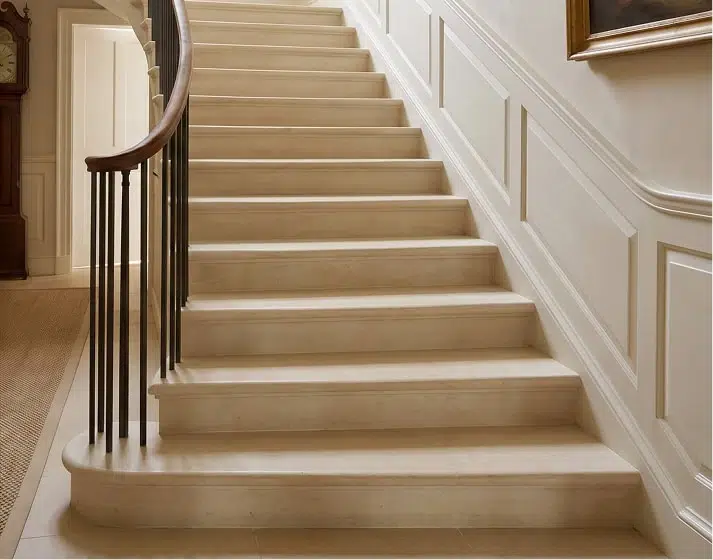
A bespoke stone package can be the most rewarding element of a project and, if it is not managed well, the most stressful. Architects, main contractors and project managers ask us regularly how the process should run, what information is needed at each stage, and where the risks sit. This guide sets out the workflow we follow on bespoke fabrication (for swimming pools & spas, to staircases, kitchens and fireplaces), from the first design brief through to delivery and installation support, so that the professionals coordinating a project can plan the stone package properly and avoid the delays and cost adjustments that come from getting the sequence wrong.
One point of clarity first, because it shapes how the later stages work. We are a stone supplier and fabricator, and our technical support runs right through to the point of installation, but the installation itself is carried out by the project’s appointed contractor or fixing team rather than by us. However, we do install for kitchen worktops and staircases. Understanding that division of responsibility early keeps everyone aligned on who does what, and it is where a well-run stone package begins.
Why a structured workflow matters
Bespoke stone is, by definition, non-standard, high-value and unforgiving of late changes: a coping cut to the wrong radius or a step templated before a structural opening is finalised is expensive to put right. A clear, staged workflow de-risks the package by making sure the right decisions are made in the right order. The stages below are the ones we work to.
| Stage | Focus | Key output |
| 1. Brief & specification | Material, performance and standards | Agreed specification |
| 2. Digital templating | Exact site dimensions | CAD templates |
| 3. Design & detailing | Drawings, tolerances, jointing. (there may be some drawings before templating too) | Approved technical drawings |
| 4. Fabrication | Cutting, machining, profiling | Finished components |
| 5. Finishing & QA | Surface finish, checks, traceability | Inspected, marked components |
| 6. Delivery & install support | Sequencing and fixing guidance | Components ready to fix |
Stage 1 Design brief and specification

Everything starts with a clear brief. At this stage we work with the design team to select the right material for the application and to pin down performance, so the specification is built on tested data rather than appearance alone. For external elements this means confirming properties such as water absorption, frost resistance and slip resistance against the relevant British Standards; for internal work it means matching the stone and finish to how the space is used. Getting this right at the outset is what prevents the wrong stone being specified for the wrong environment, which is the single most common source of problems later on.
Stage 2 Technical detailing and drawings
Once the material is agreed, the detail is developed into technical drawings. This is where profiles, thicknesses, tolerances, jointing and fixing logic are resolved, and where our input as fabricator is most useful to a design team, because we can flag where a detail will fabricate cleanly and where a small adjustment will make it easier to cut, deliver and fix. Approved drawings become the reference for everything that follows, so time invested here saves time everywhere downstream.
Stage 3 Digital templating
With drawings approved and the site ready, we template digitally, capturing the exact as-built dimensions electronically and turning them into CAD templates that drive the machinery. Templating is deliberately done once the relevant structure is in place, because it measures what the site actually is rather than what was assumed, and it is the stage that designs out the majority of fit and installation errors before any stone is cut.
Stage 4 Fabrication
Fabrication is where the templates and drawings become physical components. Depending on the detail, this combines cut-to-size sawing, CNC machining for profiles and curved work, and waterjet cutting for intricate shapes and openings, as covered in our fabrication techniques guide. Because the same digital templates drive every machine, repeated elements such as a run of steps or a sweep of coping come out identical, which is exactly what a clean installation depends on.
Stage 5 Finishing, quality control and traceability
Each component is then finished to the specified surface, whether that is honed, sawn, tumbled or bush-hammered, and inspected before it leaves the workshop. Components are checked against the approved drawings and marked up so they arrive on site in a logical, fixable sequence.
Quality of material is assessed just as carefully as quality of fabrication. We select stone from quarries across the UK and around the world, choosing each one for its consistency, technical performance and ethical extraction, and we check blocks and slabs for colour, veining and defects before they enter production. That means every component is traceable back to its source material, whatever stone the project calls for, and the finished package reads as one considered selection rather than a set of mismatched deliveries.
Stage 6 Delivery and installation support
Finished components are delivered to a schedule that suits the site programme, sequenced so the fixing team can install them in the right order. While the installation itself is carried out by the contractor’s fixing team, our technical support continues through this stage: we can advise on fixing logic, sequencing and detailing so that the work we have fabricated goes in as intended. Coordinating the sub-base or background build-up with the final stone thickness and jointing, agreed back at the detailing stage, is what avoids awkward adjustments once the stone is on site.
Aftercare
A bespoke stone package is a long-term investment, and looking after it correctly protects that investment. Rather than claim any stone is maintenance-free, we recommend planning aftercare in from the start, using cleaning products and sealers matched to the specific material. For that, we point clients towards our sister company, Rob Parker’s Best, who specialise in the care of natural stone, so that the finished work continues to perform and look as specified for decades.
Specifying with confidence
A well-run bespoke package is really a sequence of good decisions made in the right order: specify to tested performance, detail thoroughly, template once the site is ready, fabricate accurately, and support the installation properly. The earlier we are brought into that sequence, the more value we can add, because most of the risk on a bespoke stone project is removed long before anything is cut. If you have a project in mind, we are always happy to talk through the workflow and where our fabrication and technical support can strengthen it.


