 sales@stoneworld.co.uk
 01844 279274





Fireplace Stone Selection: Heat Resistance, Safety Standards and Design Considerations
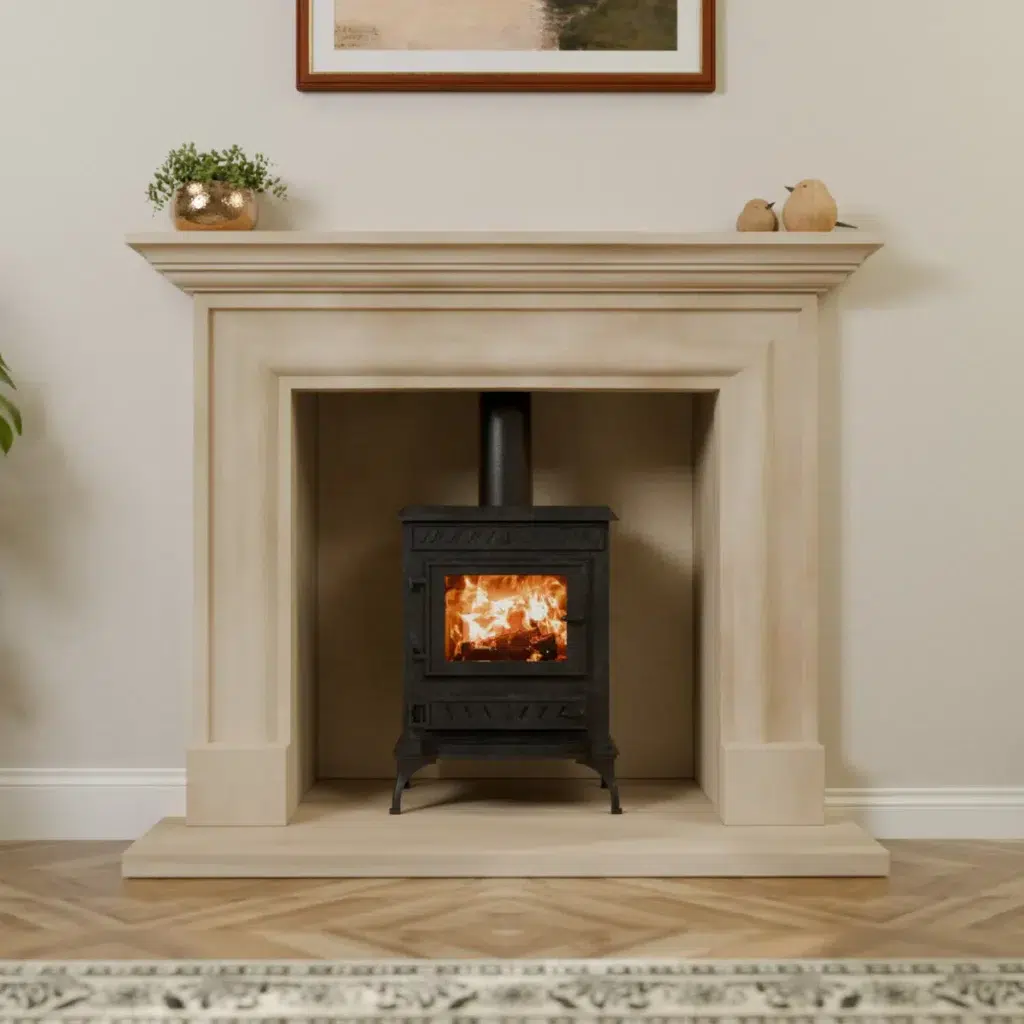
Choosing the right stone for a fireplace is a decision we are asked about constantly, and not only by homeowners. Architects, interior designers, main contractors and builders all come to us wanting to understand which materials stand up to the heat, the wear and the regulations that a working fireplace has to satisfy, before they commit a client to a particular look. A fireplace surround, hearth and mantel has to do far more than photograph well. It has to cope with repeated heating and cooling cycles, sit correctly within the clearances that Building Regulations require around a heat source, and still read beautifully in a room that people use every day.
Because we fabricate fireplace stonework from a range of materials rather than pushing a single product, we are in a good position to compare them honestly. This guide is written for the people specifying and delivering the project as much as for the person who will ultimately live with it, so we have gone beyond surface description into the detail that actually affects a specification, how each stone behaves under heat, how porous it is, how it should be finished, and how the finished stonework relates to the fire opening and the room around it.
One point we want to be clear on from the outset, because it matters for safety and for who does what on site: we fabricate and supply fireplace stonework cut-to-size, but the installation of the appliance and the hearth is carried out by the appointed builder or a competent, registered heating installer, not by us.
Why fireplace stone selection matters
A fireplace is one of the more demanding interior applications for natural stone because it combines direct radiant heat, long-term thermal cycling and, in many rooms, a safety requirement into a single detail. Get the material right and the stonework will serve for generations. Get it wrong and you can see discolouration, surface crazing or, in the worst cases, cracking within a couple of heating seasons. The table below sets out how the materials we most often fabricate for fireplaces compare across the properties that matter most.
| Property | Limestone | Sandstone | Marble | Granite |
| Heat behaviour | Good for surrounds and hearths away from direct flame | Good, robust hearth material | Sensitive to direct high heat and thermal shock | Excellent, very heat tolerant |
| Porosity / staining | Moderate, benefits from sealing | Moderate to high, seal against soot | Higher risk of staining and etching | Low, most stain resistant |
| Typical finish | Honed or sawn | Sawn, honed or riven | Honed or polished | Honed, polished or flamed |
| Best specified for | Bath limestone surrounds, hearths, mantels | Traditional and rustic hearths | Statement surrounds away from the firebox | High-output stoves and demanding hearths |
Understanding heat resistance and thermal shock
Two terms come up repeatedly in fireplace specification, and it is worth defining them because they drive most of the material decisions. Heat resistance is simply how well a stone tolerates being hot without changing colour or structure. Thermal shock is different, it is the stress a material experiences when its temperature changes very quickly, for example when one face is exposed to flame while the rest stays cool.
That uneven expansion is what causes crazing, a network of fine surface cracks, or in severe cases a clean fracture. This is why the material immediately lining a firebox is always a dedicated firebrick or a purpose-made fireboard, and why the decorative natural stone surround is detailed to sit outside the zone of direct flame rather than in it.
The practical takeaway is that almost any of the stones above will perform well as a surround or hearth when the fire opening is correctly lined and the clearances are respected. The differences between them matter most at the hearth, which takes the most concentrated heat, and immediately around the opening.
Limestone for fireplaces
Limestone is the material we fabricate most often for fireplace surrounds, hearths and mantels, and for good reason. It has a calm, consistent character that suits both traditional and contemporary rooms, it profiles cleanly, and in the right grade it is a durable hearth material. We cut and profile a significant amount of fireplace work in Bath limestone from our own quarry at Park Lane Bathstone, which gives us full traceability and consistent colour from block through to the finished, honed surround, something that is difficult to guarantee when material is bought in from third-party sources.
A typical specification might be a 40/50mm thick honed Bath limestone hearth with a matching bolection-profile surround, cut-to-size so the joints fall exactly where the design intends. Limestone does benefit from sealing to resist soot and everyday marking sinking into the stone, which should be planned in from the start rather than treated as optional.
Marble for fireplaces
Marble remains the classic fireplace material and, for a statement surround set away from the firebox, it is hard to better for sheer presence. The honest guidance we give specifiers is around two behaviours. First, marble is more sensitive to direct high heat and thermal shock than limestone or granite, so it is best kept as a surround and mantel rather than as the immediate liner of a high-output opening.
Second, marble is prone to etching, which is a dulling of the polished surface caused by acids rather than a stain sitting on top. A honed finish, which is a smooth matt surface rather than a mirror polish, shows etching far less and is often the more practical choice for a working fireplace. Specify marble for the drama it brings, but specify it knowingly.
Sandstone and granite for hearths
Where a hearth needs to take the heat of a wood burner or a high-output stove, we often steer specifiers towards sandstone or granite. Sandstone gives a robust, characterful hearth that suits traditional and rustic schemes, while granite is the most heat tolerant and stain resistant of all the options here, which makes it the natural choice for the most demanding stoves. Both can be fabricated as a single-piece hearth cut-to-size, which removes joints from the area that takes the most heat and the most foot traffic.
Safety standards and clearances This is the part of the guide the trade tends to care about most, and rightly so. Fireplace and hearth work in the UK is governed by Building Regulations Approved Document J, which deals with combustion appliances and fuel storage. The stone we fabricate has to be detailed so that a competent installer can meet those requirements on site.
In broad terms, and always subject to the specific appliance manufacturer’s instructions, a constructional hearth for a solid-fuel open fire is typically at least 125mm thick, is made from non-combustible material, and extends a minimum of around 300mm in front of the opening and 150mm to each side. For many modern wood-burning or multi-fuel stoves, the requirement can be different: where the appliance is designed so the hearth surface does not exceed 100°C, a non-combustible superimposed hearth of at least 12mm may be suitable, while higher-temperature installations or recessed stove settings may still require a full constructional hearth.
This is why it is important to distinguish between an open fire and a stove installation at specification stage, rather than assuming the same hearth build-up applies to both. Combustible materials such as timber floors or skirtings must be kept clear of the hearth edge by the distances set out in the regulations. Natural stone is inherently non-combustible, which is one of the reasons it is such a natural fit for this application, but the responsibility for installing the appliance and the hearth to the correct clearances sits with the registered installer, not with us as the fabricator and supplier.
Cleaning, sealing and long-term care
We are always straightforward that stone is a natural material and not a maintenance-free one. A sealed limestone or marble surround will shrug off everyday use for years, but soot, smoke and the occasional spill do need the right care rather than a harsh household cleaner, which can dull or etch the surface. For cleaning products and sealers matched to each stone type, we point clients towards our sister company, Rob Parker’s Best, who specialise in the correct aftercare for natural stone. Planning the cleaning regime in at specification stage, alongside the material choice, is what keeps a fireplace looking as intended over its whole life.
Design considerations
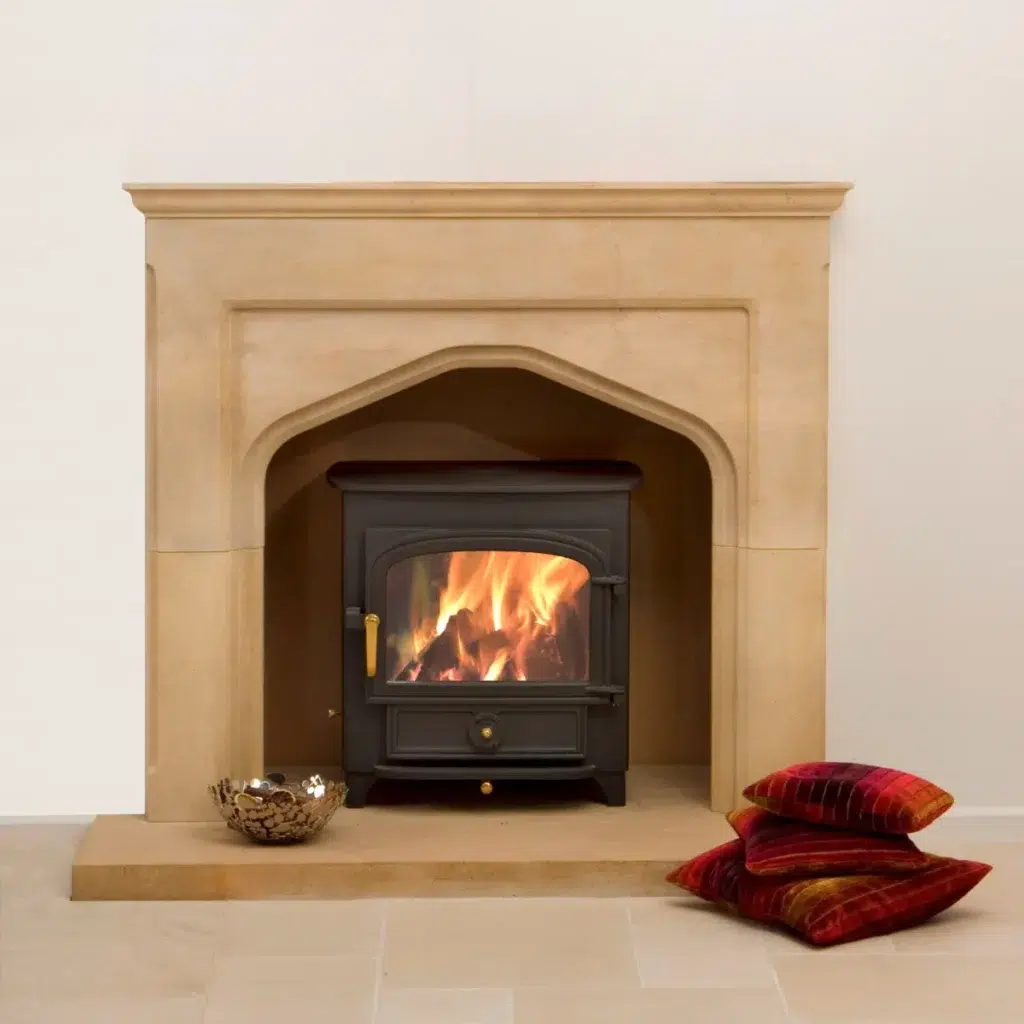
Beyond performance, the detail that separates a good fireplace from an ordinary one is proportion and precision. Because we template digitally and cut-to-size, we can hold the surround, hearth and mantel to tight tolerances so reveals are even and joints are minimal and deliberate.
For designers working across a whole scheme, we can also match the fireplace stone to other stonework in the room or the wider property, whether that is flooring, a hearthstone threshold or an adjoining wall, so the material reads as one considered decision rather than several separate purchases. We have popular designs on our website, but can produce a fireplace surround to any design – if uou have seen a design in a magazine or online we should be able to recrate this for you.
Specifying with confidence
Getting a fireplace specification right comes down to matching the stone’s real behaviour under heat to where it sits in the detail: heat-tolerant granite or sandstone where the concentrated heat is, calm and characterful limestone or marble for the surround and mantel, and correct clearances designed in from the start. If it would help to talk a specific fireplace detail through, whether that is confirming a hearth build-up against Approved Document J with your installer or matching a Bath limestone surround to existing stonework, we are always happy to have that conversation before anything is cut.


